
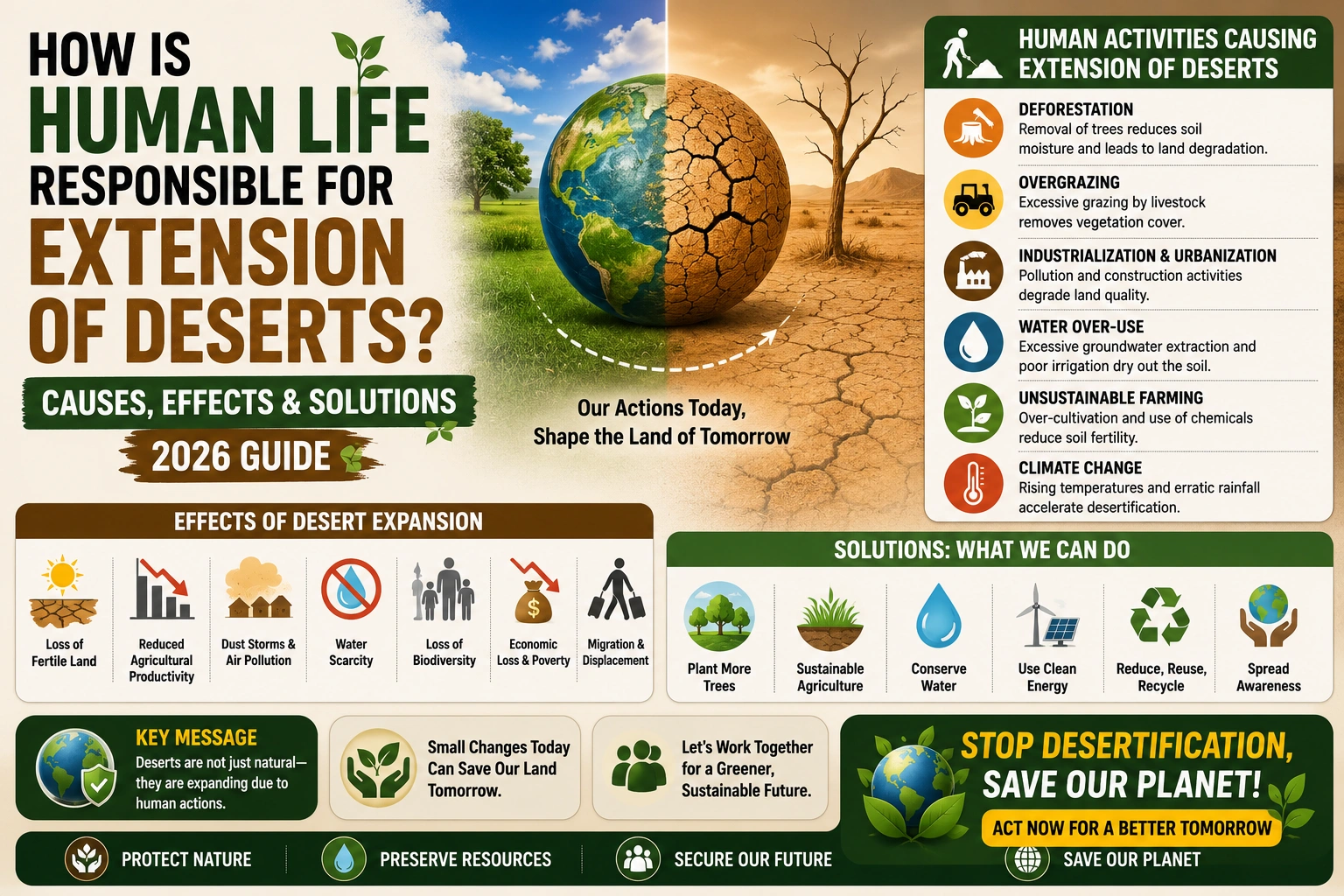
How Is Human Life Responsible for Extension of Deserts – through activities such as deforestation, overgrazing, excessive groundwater use, unsustainable farming, urbanization, mining, and climate change. These activities degrade fertile land, reduce vegetation, increase soil erosion, and accelerate desertification, causing productive land to become dry and barren.
Human life is responsible for the extension of deserts through activities that degrade dryland ecosystems faster than they can recover. The main human-driven causes include overgrazing by livestock, deforestation for agriculture and fuelwood, overcultivation of marginal lands, unsustainable irrigation practices, and urbanization that seals soil surfaces.
These activities strip away protective vegetation cover, exposing topsoil to wind and water erosion. Overgrazing removes plant life and compacts soil, reducing water absorption. Deforestation disrupts the ecological balance that helps maintain rainfall patterns.
Poor irrigation leads to salinization, where salt buildup makes land unproductive. At least 25% of the world’s land area is now affected by desertification to some degree. This guide explores all the ways human activity drives desert expansion and what can be done to reverse it.
The Human Footprint on Drylands
Deserts are not just expanding naturally. Human activity is accelerating their spread. The process is called desertification – the degradation of land in arid, semi-arid, and dry sub-humid areas. It reduces the land’s biological productivity and converts productive pastures and farmland into desert-like conditions.
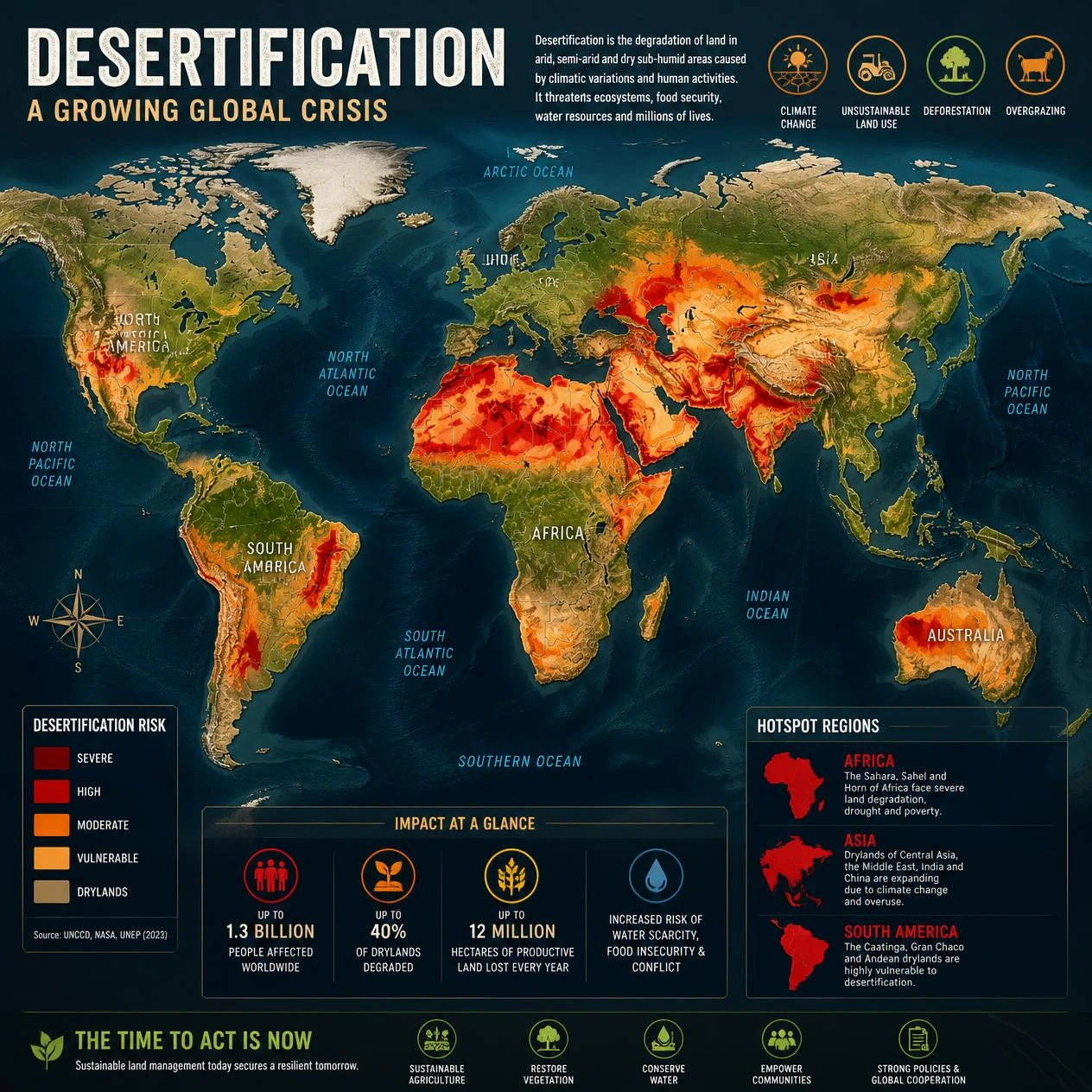
The scale is staggering. Up to 40% of the world’s land is degraded, affecting around 3.2 billion people – nearly half the global population. At least 25% of the world’s land area is affected by desertification to some degree. Every year, 100 million hectares of healthy, productive land are lost.
The problem is not just about deserts growing larger. It is about the irreversible loss of ecosystems that support human life. Once land degrades beyond a certain point, recovery can take hundreds or thousands of years. Understanding how human life drives this process is the first step toward stopping it.
How Human Activities Drive Desertification
The Core Mechanism: How Desertification Works
Desertification usually starts with the removal of vegetation cover by humans or livestock. Plants protect the soil. Their roots hold the soil together, their leaves shield it from wind and rain, and their presence maintains moisture in the ground.
When vegetation is removed, the topsoil becomes exposed. Wind and water erosion begin. The soil loses its fertility. In compacted soil, less water infiltrates, limiting water available for plant uptake. The reduced fertility and water stress cause productivity to drop, which further degrades the vegetation cover. This creates a vicious cycle that accelerates desert expansion.
The Livestock Impact
Livestock overgrazing is one of the primary causes of desertification in pasture lands. When animals graze too heavily on grasslands, they destroy plant life and compact the soil.
How overgrazing damages the land:
- Vegetation loss: Grazing animals consume plants down to the ground, weakening them and reducing photosynthesis.
- Soil compaction: Livestock trampling compacts the soil, reducing its ability to absorb water.
- Soil erosion: With protective vegetation gone and soil compacted, wind and rain easily erode the topsoil.
- Nutrient depletion: The loss of topsoil removes nutrients essential for plant growth.
- Species shift: Livestock selectively eat certain plants, giving a competitive advantage to inedible species like cacti and shrubs.
In the Sudano-Sahelian region of Africa, more than 70% of dry lands are degraded, largely due to overgrazing and other unsustainable practices. Once vegetation is lost and soil is compacted, the land may take decades or even centuries to recover.
Removing Nature’s Protection
Deforestation is one of the most significant human activities fueling desertification. Forests play a critical role in maintaining ecological balance. They facilitate water absorption, provide habitats for countless species, and help create rainfall patterns.
How deforestation causes desertification:
- Loss of tree cover: Without trees to anchor the soil, areas become susceptible to erosion and loss of fertility.
- Disruption of rainfall patterns: Trees help create low-pressure systems that induce cloud formation. When forests are cleared, precipitation can decrease dramatically.
- Exposed soil: Deforested land loses the protection of vegetation, especially during dry seasons, and suffers from severe wind erosion.
- Abandoned farmland: Land cleared for agriculture is often abandoned after crop failure. Without plant protection, the loose, plowed soil easily develops into sand dunes under strong wind.
The impact of deforestation is well documented. Research shows that deforestation in lowland areas can reduce cloud formation and precipitation in nearby mountains. The same mechanisms that operated thousands of years ago in the Middle East continue today in Africa, South America, and Asia.
Historical Evidence:
More than 2,000 years ago, emerging civilizations worldwide caused massive deforestation and land degradation. Southern Arabia, Central Asia, Central America, Peru, and Northern Africa were all densely populated. Agricultural activities likely caused irreversible land degradation, increasing the world’s desert areas by at least 100%.
Farming Marginal Lands
Overcultivation of marginal lands is another major cause of desertification. Marginal lands are areas that are barely suitable for farming – they have poor soil, limited water, or steep slopes. When farmers clear these lands for agriculture, the results are often disastrous.
The overcultivation cycle:
- Land is cleared of natural vegetation
- Crops are planted, often using unsustainable practices
- When crops fail, the land is abandoned
- With no plant protection, the loose, plowed soil erodes
- Sand dunes begin to form
Slash-and-burn agriculture is a particularly destructive practice. Farmers cut and burn natural perennial vegetation – including trees and shrubs – to clear land for annual crops. As annual agriculture expands, the land loses protection from vegetation, especially during dry seasons, and suffers from severe wind erosion.
Globally, 40% of agricultural land is moderately degraded, and 9% is strongly degraded, reducing crop yields by 13%. In Africa, 65% of cropland is degraded, compared with 51% in Latin America and 38% in Asia.
Unsustainable Irrigation and Water Mismanagement
Water mismanagement is a major driver of desertification, especially in irrigated lands. While irrigation allows farming in dry areas, it can also destroy the land if not managed properly.
Two major problems with irrigation:
Salinization:
When water is used for irrigation, it evaporates and leaves behind salts that were dissolved in the water. Over time, these salts build up in the root zone, increasing osmotic pressure and reducing plants’ ability to tolerate water stress. In Iraq, over 70% of irrigated land has been lost to salt accumulation. In the United States, salt accumulation has lowered crop yields across more than 50,000 square kilometers of irrigated land.
Waterlogging:
Overirrigation can cause the water table to rise to the root zone. This fills all the soil pores and obstructs gas exchange between soil and air. Harmful chemicals build up, damaging plant growth.
Over-extraction of groundwater: When groundwater is extracted faster than it can be replenished, aquifers diminish, further exacerbating desert conditions. Once groundwater is depleted, the land may never recover.
Urbanization and Soil Sealing
As cities expand, natural landscapes are increasingly covered by concrete and asphalt. This process, called soil sealing, prevents water from penetrating the ground. It leads to increased runoff, which erodes topsoil and diminishes water availability for vegetation.
Urban areas also generate heat, exacerbating local climate conditions. As temperatures rise and rainfall patterns change, the surrounding soil becomes drier, further promoting the transformation of fertile land into desert. Urbanization is predicted to cause the loss of 1.6–3.3 million hectares annually of prime agricultural land over the next 20 years.
Poverty, Population Pressure, and Policy Failures
Poverty and population growth drive desertification in several ways:
- Short-term survival strategies: Poor communities often rely on unsustainable practices because they cannot afford long-term solutions. Overgrazing and deforestation may be the only options for survival.
- Lack of alternatives: Without access to credit, schooling, or technical training, farmers have limited options.
- Fuelwood crisis: In Africa and Asia, firewood is the principal raw material for cooking and heating. A family of four consumes roughly two tons of firewood per year. As populations grow, the demand for firewood exceeds what the land can sustainably provide.
Policy failures also contribute. Inadequate or poorly enforced regulations on land use, combined with insufficient public awareness, allow harmful practices to continue unchecked.
The Historical Scope: How Long Has This Been Happening?
Human-induced desertification is not new. It has been happening for thousands of years.
Ancient Civilizations: The rapid spread of civilization between 5,000 and 10,000 years ago wreaked havoc on semi-arid ecosystems. Growing resource needs – mainly firewood, construction materials, and agricultural products – caused massive deforestation and land clearing.
The Middle East: Around 2 million square kilometers (about 50%) of ecosystems surrounding the Mediterranean and in Central Asia were heavily impacted by deforestation and desertification. The resulting drying out of the area is well documented.
Plato’s Observations: The Greek philosopher Plato described human-induced desertification in Greece 2,500 years ago. He documented the causal interaction between deforestation in the Greek hills and the resulting erosion and desertification.
Modern Acceleration: Since 1700 CE, anthropogenic impacts have been the dominant driver of desertification in many regions.
This is not a new problem. But it has accelerated dramatically with population growth and industrialization.
The Consequences: Why Desertification Matters
Image Placeholder 6: [Image: Impact of desertification – displaced people, failing crops, food insecurity]
Loss of Agricultural Productivity:
Moderate desertification causes a 10–25% drop in agricultural productivity. Severe desertification can result in a productivity loss of 50% or more. Each year, millions of hectares of cropland are abandoned due to low productivity caused by soil erosion.
Food Insecurity and Famine:
When land loses its productivity, food production declines. The resulting threat of famine has serious social and economic impacts. In the Sudano-Sahelian region, more than 80% of the world’s population that is moderately to severely affected by desertification resides.
Displacement and Migration:
Desertification is one of the most severe environmental challenges facing humanity. As many as 135 million people may be displaced by desertification by 2045.
Climate Change Feedback:
Desertification contributes to climate change. Drylands with low plant production and low organic soil carbon are vulnerable to extreme weather. Degraded land also loses its capacity to absorb CO2. Land ecosystems absorb one-third of human CO2 emissions, but poor land management threatens this critical capacity.
What Can Be Done? (Solutions)
While human activity drives desertification, human intervention can also reverse it.
Sustainable Land Management:
- Crop rotation, agroforestry, and permaculture can enhance soil quality and biodiversity.
- Reforestation and wetland restoration can revive ecosystems.
- Grazing exclusion and rotational grazing policies have shown positive results.
Sustainable Agriculture:
- Reducing overgrazing by managing livestock numbers
- Using sustainable farming techniques
- Avoiding cultivation of marginal lands
Better Water Management:
- Using efficient irrigation techniques
- Avoiding over-extraction of groundwater
- Preventing salinization
Policy and Education:
- Stronger regulations on land use
- Education and outreach to communities
- Investment in sustainable alternatives
Individual Actions:
- Reducing meat consumption can help because soy grown as fodder is a primary crop contributing to deforestation.
- Supporting regenerative agriculture
- Conserving water
Frequently Asked Questions (FAQ)
What is desertification and how does human activity cause it?
Desertification is land degradation in arid, semi-arid, and dry sub-humid areas. Human activities like overgrazing, deforestation, overcultivation, and poor irrigation strip away protective vegetation, exposing soil to erosion and reducing productivity.
How does overgrazing lead to desertification?
Overgrazing removes plant life and compacts soil through livestock trampling. Without protective vegetation, topsoil erodes easily, and compacted soil cannot absorb water. This reduces fertility and leads to further vegetation loss.
What role does deforestation play in desertification?
Deforestation removes trees that anchor soil and regulate water cycles. Without tree cover, soil erodes, rainfall patterns are disrupted, and the land loses its ability to retain moisture, accelerating desertification.
How does irrigation cause desertification?
Unsustainable irrigation leads to salinization (salt buildup in soil) and waterlogging. Both conditions make land unproductive. Over-extraction of groundwater also diminishes water supplies for vegetation.
Is desertification a natural process or human-caused?
Desertification is driven by both climate variations and human activities. However, human activities are often the decisive factor, especially since 1700 CE when anthropogenic impacts became the dominant driver in many regions.
Can desertification be reversed?
es, but recovery takes time. Reforestation, sustainable grazing management, and improved irrigation techniques can reverse desertification. However, full ecosystem recovery may take decades or centuries.
How many people are affected by desertification?
Up to 3.2 billion people are affected by land degradation. As many as 135 million people may be displaced by desertification by 2045. At least 25% of the world’s land area is affected to some degree.
What can individuals do to prevent desertification?
Reduce meat consumption, support sustainable agriculture, conserve water, and reduce carbon footprint. Individual consumer choices do contribute to the problem – and they can help solve it.
Conclusion: The Power to Create – or Destroy – Drylands
Human life is responsible for the extension of deserts through a combination of overgrazing, deforestation, overcultivation, poor irrigation, and urbanization. These activities strip away vegetation, expose soil to erosion, and degrade land beyond its ability to recover.
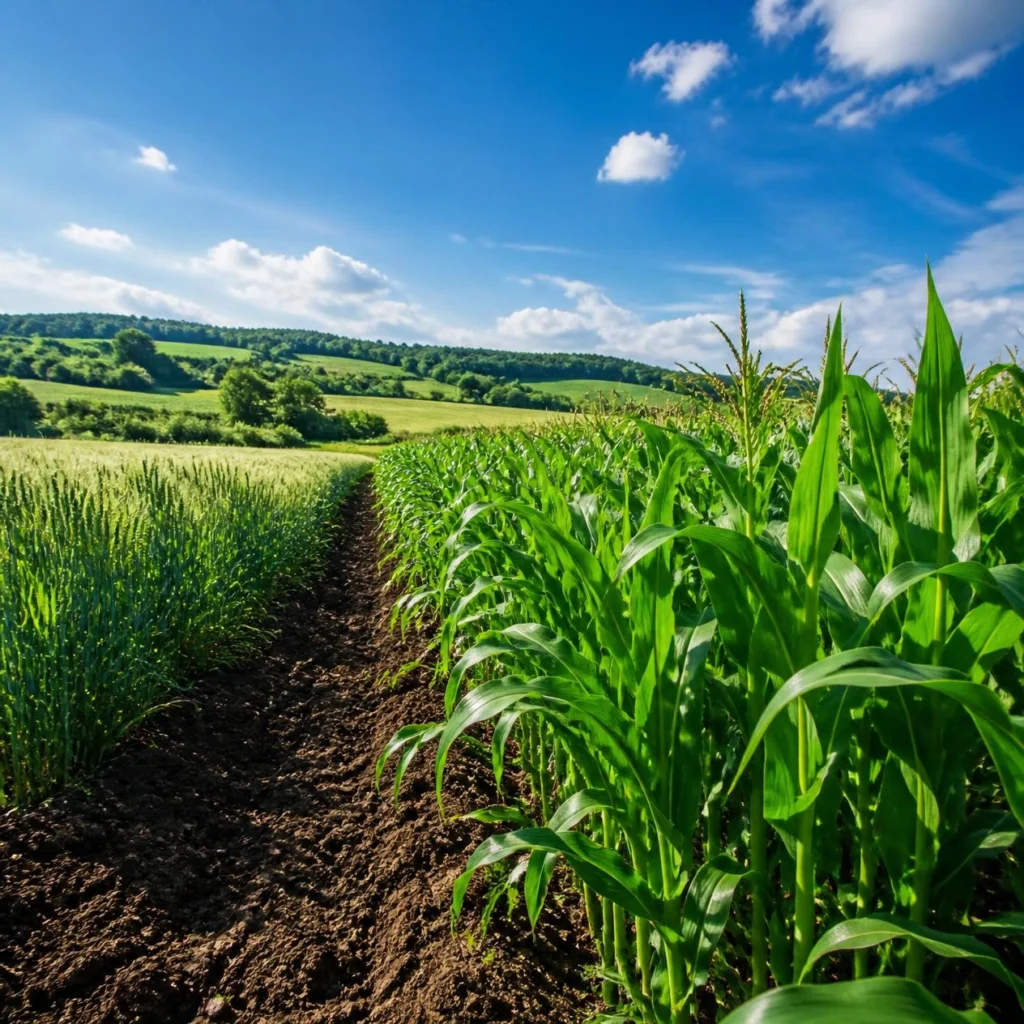
But the same human ingenuity that caused desertification can also reverse it. Sustainable land management, reforestation, better water use, and individual choices can restore degraded lands.
Quick Recap Checklist:
- Desertification is driven by overgrazing, deforestation, overcultivation, poor irrigation, and urbanization
- It affects 25% of the world’s land and 3.2 billion people
- Recovery is possible through sustainable practices
- Individual actions – reducing meat consumption, conserving water – make a difference
- The choices we make today will determine whether drylands become deserts or remain productive ecosystems
The desertification crisis is urgent. But it is not hopeless. With awareness, commitment, and action, we can stop the spread of deserts and restore the land that sustains us.

