
Did you know a one-second delay in page load time can cause a 7% drop in conversions? For businesses in India, this shows why picking the best web hosting option is key to your online success.
Understanding server environments can be tough. I want to make these ideas simple so you can choose wisely for your website’s future.

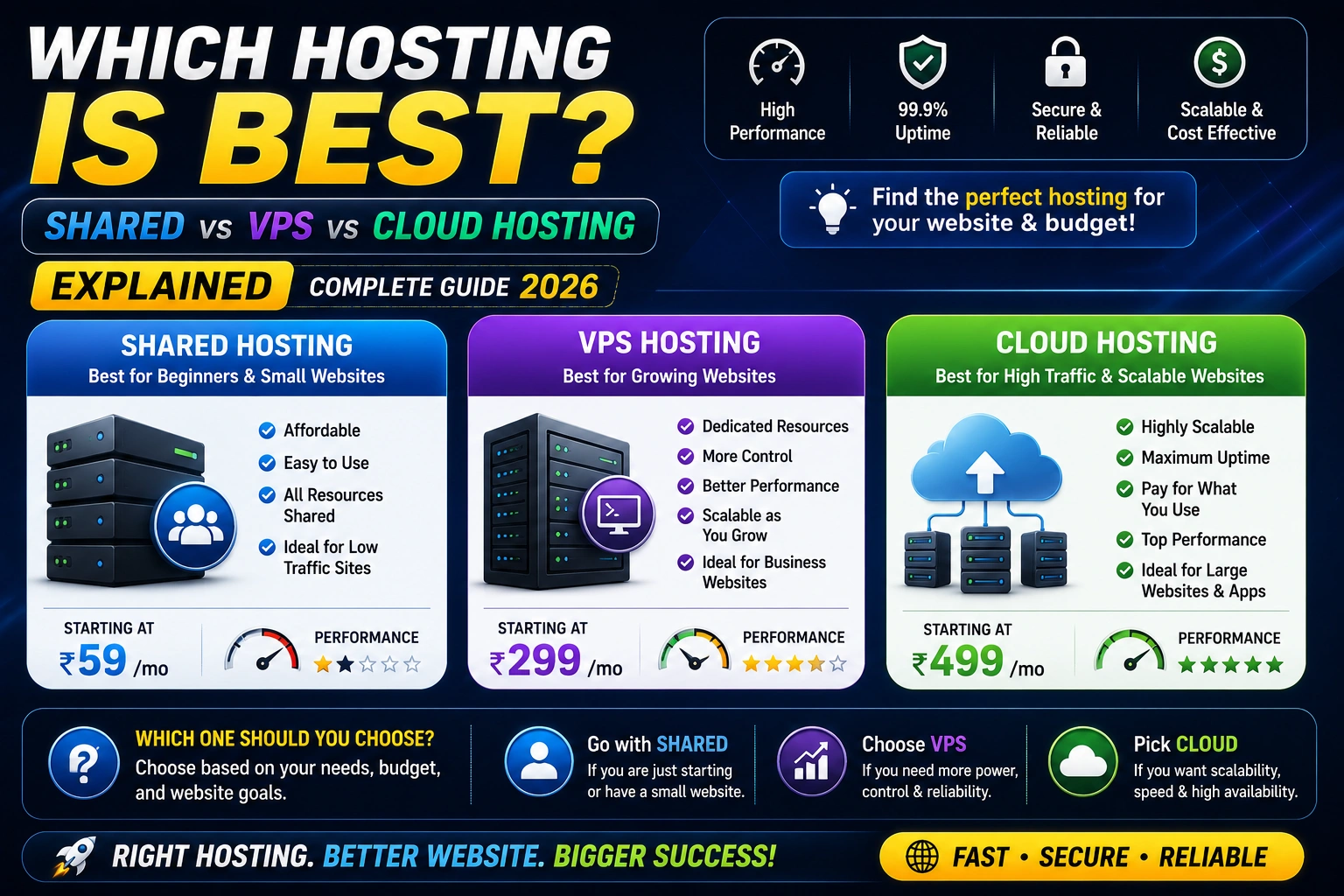
In this guide, I’ll break down the differences between hosting types explained here. By looking at Shared Hosting, VPS, and Cloud Hosting, I hope to help you find the best fit for your traffic needs and budget.
Key Takeaways
- Performance affects your conversion rates and keeps users coming back.
- Picking the right server environment is essential for growth.
- Shared environments are great for beginners with little traffic.
- VPS offers a good mix of control and cost.
- Cloud solutions are the most reliable for expanding online projects.
Understanding the Fundamentals of Web Hosting
Knowing the basics of server architecture is key to a successful online presence. When you start a website, you rent space on a computer always connected to the internet. Whether it’s shared hosting vs vps vs cloud hosting, the core idea is the same: your files need a home.
How Hosting Infrastructure Impacts Website Performance
The hardware of your server is like the engine of your website. If your site gets a lot of traffic, it needs more CPU power and RAM to handle requests fast. Without enough, your visitors will face slow loading times, which can lead to more people leaving your site.
Storage technology is also key to fast page loading. Modern servers with Solid State Drives (SSD) are much faster than old hard drives. Picking the right setup means your database queries and file transfers are almost instant.
The Importance of Choosing the Right Server Environment for Indian Traffic
For those aiming at an Indian audience, where the server is matters a lot. Data has to travel to reach users, and the farther the server, the higher the latency. It’s wise to choose a provider with servers in India for a quicker user experience.
A good web hosting comparison shows local hosting cuts down page load time a lot. By being closer to your visitors, you get a faster, more reliable connection. This is vital for keeping users engaged in a competitive online world.
| Infrastructure Component | Impact on Performance | Importance Level |
|---|---|---|
| CPU/RAM | Processing Speed | High |
| SSD Storage | Data Retrieval | High |
| Server Location | Latency/Ping | Critical |
| Network Bandwidth | Traffic Capacity | Medium |
Shared Hosting: The Budget-Friendly Starting Point
Shared hosting is a great way to start a website without spending a lot of money. It’s the most popular choice for beginners and small businesses in India. It’s a good starting point for those on a budget.
Defining Shared Hosting and Its Resource Allocation
Your website shares a server with many others. You all use the same resources like CPU, RAM, and storage.
It’s like living in an apartment where you share utilities. This makes it very affordable. It’s perfect for new projects.
Pros and Cons of Shared Hosting for Small Businesses
Shared hosting is very affordable. Plans are often cheaper than a cup of coffee. It’s great for testing new business ideas.
But, there are downsides. A sudden increase in traffic on another site can slow yours down. This is a big difference compared to other hosting types.
When to Choose Shared Hosting
Choose shared hosting for a personal blog, small portfolio, or local business site. It’s best when your site gets little traffic. You don’t need complex server settings.
It’s simple to use, so you can focus on your content. It has all the basics to get your site up and running fast.
Common Limitations of Shared Hosting
The main problem is limited power. As your site grows, it may not handle more visitors well. This can slow down your site.
Security is also a concern. If another site on the server gets hacked, it could affect your site too. This is because you’re sharing the same environment.
VPS Hosting: The Middle Ground for Growing Websites
Growing businesses often find shared plans too limited. VPS hosting is a better choice for them. It offers a private server slice without the cost of dedicated hardware.
How Virtual Private Servers Provide Dedicated Resources
A Virtual Private Server divides a physical server into separate environments. Unlike shared hosting, where resources are shared, VPS gives you a dedicated share. This ensures your site stays stable even when others get a traffic surge.
Benefits of Scalability and Control in VPS Environments
VPS hosting offers great control and scalability. You can install custom software and adjust server settings. Scaling resources is easy, helping your business grow in India.
Managed vs Unmanaged VPS Options
Choosing between managed and unmanaged VPS depends on your tech skills. A managed VPS lets the provider handle updates and security. An unmanaged VPS is cheaper but requires you to manage everything yourself.
Performance Gains Over Shared Hosting
Switching to VPS hosting boosts your site’s performance right away. Your site loads faster and handles more visitors better. This is key for keeping users engaged and improving search rankings.
| Feature | Shared Hosting | VPS Hosting |
|---|---|---|
| Resource Allocation | Pooled/Shared | Dedicated/Isolated |
| Control Level | Limited | Full Root Access |
| Performance | Variable | Consistent |
| Cost | Low | Moderate |
Cloud Hosting: The Modern Solution for High Availability
Looking at today’s hosting solutions, cloud technology shines. It scales in a way traditional setups can’t. Your data spreads across many servers, not just one.
This spread is why many businesses choose cloud hosting. It’s the heart of its appeal.
The Architecture of Cloud Hosting Explained
Cloud hosting uses virtualization to create a virtual pool of resources. Your website gets power from many machines working together. If one server fails, others take over without you needing to do anything.
This smooth transition keeps your site up and running. It’s a big advantage over older hosting types.
Why Cloud Hosting Offers Superior Uptime and Reliability
Reliability is key for a good web presence. With cloud hosting, your site is less likely to go down. It’s great for handling sudden traffic spikes, which is important for growing brands in India.
Understanding Pay-as-You-Go Pricing Models
The pay-as-you-go pricing model is a big plus. You only pay for what you use. This makes it affordable for startups and big companies alike.
The Role of Redundancy in Cloud Infrastructure
Redundancy keeps your data safe. It mirrors your files in different places. This ensures your content is always available. It’s why cloud hosting is top-notch for high-traffic sites.
| Feature | Traditional Hosting | Cloud Hosting |
|---|---|---|
| Resource Scaling | Manual/Limited | Instant/Automatic |
| Uptime Reliability | Moderate | Very High |
| Pricing Structure | Fixed Monthly | Pay-as-you-go |
| Hardware Dependency | Single Server | Distributed Cluster |
Shared Hosting vs VPS vs Cloud Hosting: A Comparative Analysis
Choosing the right hosting plan is easier when you compare how each type handles traffic. Think of it like choosing between a shared apartment, a private townhouse, or a big estate. Each option has its own benefits, depending on your site’s traffic and technical needs.
If you like to read about browsing, then explore this guide – Safe Browsing Tips Everyone Should Know: Protect Yourself Online (2026 Guide)
Performance and Speed Benchmarks
In a web hosting comparison, speed is key. Shared hosting can slow down if another site gets too busy. But VPS and cloud hosting keep your site fast, even when it’s busy.
“Speed is the currency of the modern web; if your site lags, your visitors will simply move on to the next option.”
Security Features and Data Protection Standards
Security is a big difference between these hosting types. Shared hosting has basic security, but you’re at risk from other users. VPS hosting offers superior isolation, keeping your data safe.
Cloud hosting goes even further by spreading your data across many nodes. This means your site stays online and secure, even if something goes wrong. This is great for businesses that handle sensitive info.
Ease of Use and Technical Management Requirements
Knowing the difference between shared hosting and vps is key. Shared hosting is easy to use, with the provider handling most tasks. VPS and cloud hosting need more technical skills, but many providers offer “managed” options to help.
| Feature | Shared Hosting | VPS Hosting | Cloud Hosting |
|---|---|---|---|
| Resource Control | Low | High | Very High |
| Security Level | Basic | Strong | Excellent |
| Management | Fully Managed | Semi-Managed | Flexible |
Your choice should match your growth plans. Shared hosting is a cost-effective entry point for beginners. But as your site grows, moving to a VPS or cloud environment will give you the stability and control you need for success.
Step-by-Step Guide to Assessing Your Website Needs
I want to help you understand hosting services better. We’ll break down your needs into simple steps. Knowing what your website needs before signing up is key. It saves you from future headaches.

Evaluating Your Current Traffic and Resource Usage
Start by looking at your website’s visitor numbers. Use tools like Google Analytics to see your monthly visitors and peak times. Knowing these patterns helps you avoid overpaying for unused capacity.
Also, think about your storage and bandwidth needs. A site with lots of media will use more resources than a simple blog. Check your CPU and RAM usage to make sure your current hosting services can grow with you.
Determining Your Technical Expertise Level
Be honest about your server management skills. If you’re good with command lines, an unmanaged plan might be right. But, most prefer managed solutions for easier updates and security.
Choosing the wrong management level can cause problems. If you’re not tech-savvy, look for hosting services with great customer support. This lets you focus on your content, not server details.
Setting a Realistic Budget for Hosting Services
Setting a budget means balancing your money with your website’s needs. Don’t just look at the initial price; renewal rates can be higher. Remember to include costs for extras like SSL certificates or backups.
The table below helps match your needs with the right hosting services:
| User Profile | Technical Skill | Budget Range | Recommended Hosting |
|---|---|---|---|
| Personal Blog | Beginner | Low | Shared Hosting |
| Growing Business | Intermediate | Medium | VPS Hosting |
| High-Traffic E-commerce | Advanced | High | Cloud Hosting |
By following this guide, you’ll make a smart choice in hosting services. Remember, your needs will change, so pick a provider that makes upgrades easy.
How to Migrate Your Website Between Hosting Types
Switching to a new hosting solution is a big step for your site. It might seem scary to move files and databases, but with a plan, it’s smooth. Think of it as upgrading, not just a technical task.
Preparing Your Data for a Seamless Transition
First, make sure your data is safe. I always do a full backup of my site’s files and database. This way, I avoid losing any important data.
- Check that your backup files are good and complete.
- Keep track of all email accounts and settings.
- Test your site on the new server before changing your domain.
These steps help find any problems early. By testing your site on the new server, you make sure it works well with your hosting solutions.
Choosing the Right Time to Upgrade Your Hosting Plan
Finding the best time to move depends on your site’s performance. If it’s slow or keeps timing out, it’s time for a change.
Look for these signs that it’s time to upgrade:
- Your site is loading slowly, even after trying to make it faster.
- You’re hitting limits on your server, like CPU or RAM.
- Your business is growing and needs more from your hosting.
Upgrading at the right time keeps your site running smoothly. Don’t wait until it breaks to start planning.
Minimizing Downtime During the Migration Process
The main goal is to keep your site up and running. I plan migrations for when it’s least busy.
Use a temporary URL to check the new server. Once it’s working, update your DNS to point to the new server.
Remember, DNS changes take time. Keep your old server up for a few days. This strategic overlap ensures no visitors are lost while the internet updates.
Top Considerations for Hosting Providers in India
Choosing the right hosting services is key when you create a website for people in India. It’s important to pick a provider that knows the local market well. A good hosting providers comparison looks at more than just specs. It makes sure your hosting fits your visitors’ needs.

The Significance of Local Data Centers for Latency
How close your server is to your users affects your website’s speed. A server far away means slower data transfer, leading to lag. Hosting in cities like Mumbai or Chennai ensures fast content delivery to local users.
Fast page loading is essential to keep visitors on your site. Quick loading times can lower bounce rates and boost your search engine rankings. Always check the server location before signing up.
Evaluating Customer Support Quality and Response Times
Technical problems can pop up anytime. Reliable support is a big help. Look for providers with 24/7 support through live chat, phone, and email. Test their response time with a pre-sales query to see how fast they reply.
“Infrastructure is the backbone of the internet, but local support is the heartbeat that keeps businesses running smoothly during critical outages.”
Good support teams get the unique challenges of Indian website owners. They should offer specific, helpful advice, not just generic steps. Quality support can turn a small issue into a big problem.
Checking for Local Payment Options and Currency Support
Managing your subscription should be easy. Many international companies struggle with payments from Indian accounts or local wallets. Look for providers that accept UPI, net banking, and local credit cards to avoid payment issues.
Also, paying in Indian Rupees (INR) helps avoid exchange rate problems. This makes budgeting for your hosting services more predictable. Here’s a quick guide to what to look for in your hosting providers comparison.
| Feature | Why It Matters | Priority Level |
|---|---|---|
| Local Data Center | Reduces latency for Indian users | High |
| INR Payment Support | Simplifies billing and avoids fees | Medium |
| 24/7 Local Support | Ensures quick issue resolution | High |
| Scalability Options | Supports future business growth | Medium |
Common Pitfalls to Avoid When Selecting a Hosting Plan
Choosing the best web hosting option is more than just looking at the price. Many rush into this decision, only to need a new host soon after. Knowing the common mistakes helps you make a choice that supports your long-term goals.
Ignoring Future Scalability Requirements
It’s easy to focus on your current traffic. But your site will likely grow. If you pick a plan that can’t grow with you, you’ll hit performance limits. Always verify that your provider lets you easily upgrade without moving your site.
Overestimating Your Technical Management Capabilities
Many beginners save money by choosing unmanaged VPS or dedicated servers. But they soon find they can’t handle them. If you’re not good with command lines or server security, a managed plan is safer. A good hosting providers comparison will show you which support level you need.
Falling for Unrealistic Unlimited Resource Claims
Be wary of “unlimited” storage or bandwidth claims. These plans often have strict “fair usage” policies that can slow your site. Transparency is key. Look for providers that clearly state their limits, not hiding them in fine print.
| Common Pitfall | Potential Impact | Recommended Action |
|---|---|---|
| Ignoring Scalability | Frequent site crashes | Check upgrade paths |
| Overestimating Skills | Security vulnerabilities | Choose managed hosting |
| Unlimited Claims | Sudden performance drops | Read the TOS carefully |
Conclusion
Choosing the right foundation for your website is key to your digital success. Think about your current traffic and how comfortable you are with tech before picking a host like Hostinger or Bluehost.
For small blogs, shared hosting is a good start. VPS is better for growing businesses needing more power. Cloud hosting is best for uptime and scaling during traffic peaks.
I want you to feel sure about your hosting choices. Focus on local data centers and reliable support for your Indian audience. This way, you’ll have a fast and secure online space.
Review your business goals and current needs. Your website should grow with you. Begin your journey today with a solid plan and the right hosting partner.
FAQ
What is the main difference between shared hosting and vps for a growing business?
Shared hosting is the cheapest option where you share server resources with many others. But, as your site grows, a VPS is better. It gives you a virtual space with your own CPU and RAM, so your site runs smoothly.
What are the primary cloud hosting benefits compared to traditional server setups?
Cloud hosting is great for its high availability and easy scalability. It uses many servers, so if one fails, others take over. This keeps your site up and running, even during big traffic spikes. Plus, it’s often cheaper because you only pay for what you use.
How should I conduct a web hosting comparison when targeting users in India?
When comparing hosting, server location is key. For Indian users, choose hosts with servers in Mumbai or Bangalore. Hostinger India or BigRock are good options. They reduce latency and improve page speeds for local visitors.
Of the hosting types explained in this guide, which is easiest for a beginner to manage?
For beginners, shared hosting is the best. It’s easy to use, with providers like Bluehost or SiteGround taking care of the tech stuff. You can focus on your content without worrying about server management.
Is a hosting providers comparison necessary if I only need a basic WordPress site?
Yes, comparing hosting providers is essential, even for simple sites. It helps find the best uptime, support, and security. Some hosts offer free SSL and backups, while others charge extra. Comparing ensures you avoid hidden costs.
When comparing shared hosting vs vps vs cloud hosting, which offers the best security?
VPS and cloud hosting are more secure than shared hosting. Shared hosting is more vulnerable because a breach can affect others. VPS and cloud setups offer isolated environments, making them safer for sensitive data.
Are there specific hosting solutions that handle “unlimited” resource claims better than others?
Be cautious of “unlimited” claims, as they’re often misleading. Every server has limits. If your site uses too much, you’ll need to upgrade. For high usage, skip shared plans and go for a VPS or cloud hosting where limits are clear.

