
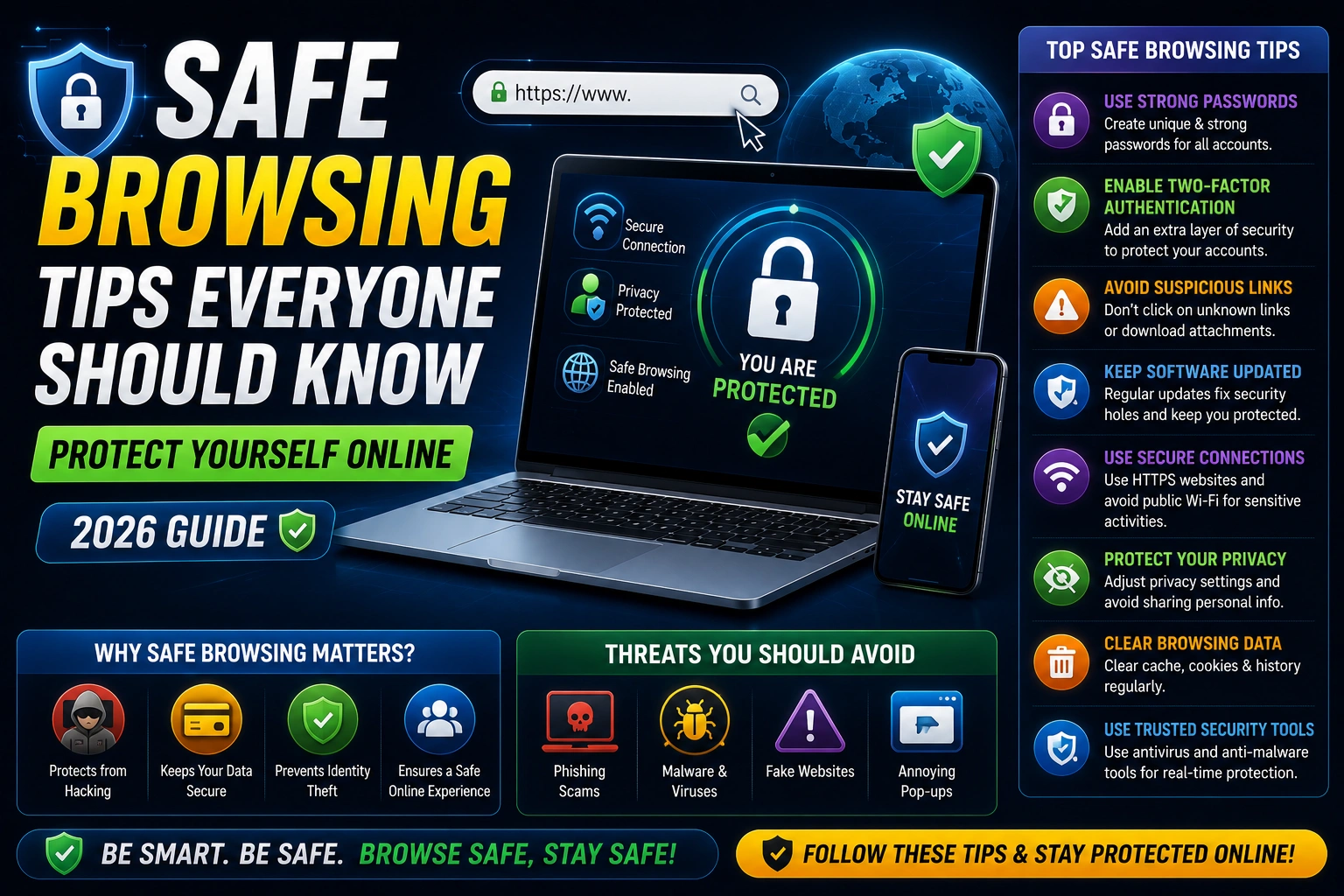
Safe browsing means using the internet in ways that help protect your personal information, devices, and online accounts from cyber threats. Following safe browsing tips, such as using strong passwords, enabling two-factor authentication, avoiding suspicious links, and keeping software updated, can significantly reduce your security risks. Read this full guide written on Birthday Wish Note, learn and understand Safe browsing tips.
Did you know over 80% of cyberattacks in India now target individual users? As we move through the digital world of 2026, keeping our online presence safe is key. Cyber threats are evolving fast, so it’s important to stay ahead by protecting your personal info online.

Learning to stay safe online is your best defense against today’s scams. By mastering these key steps, you can surf the web with confidence. This guide will teach you how to keep your digital life secure.
Key Takeaways
- Understand the rising scale of individual cyber threats in India.
- Prioritize data privacy to prevent identity theft.
- Recognize common phishing tactics used by modern attackers.
- Implement multi-factor authentication across all personal accounts.
- Regularly update software to patch critical security vulnerabilities.
Understanding the Modern Threat Landscape in India
Digital adoption in India is growing fast. This means online threats are getting more complex. It’s now essential to know Safe Browsing Tips Everyone Should Know to stay safe online.
The Evolution of Cyber Threats in 2026
In 2026, cyber threats in India have changed a lot. Gone are the days of simple malware attacks. Now, cybercriminals use sophisticated social engineering schemes to trick people.
They pretend to be banks or government sites to fool users. These threats are sneaky and hard to detect. But, following cybersecurity best practices can help protect you.
Why Personal Data is a Prime Target
Personal data is now the most valuable thing for cybercriminals. They use it for financial fraud and more. So, keeping your digital life safe is key to avoiding online threats.
Data breaches can lead to more problems. With many services using the same email or phone number, security risks are high. Prioritizing your privacy is the best way to keep your info safe.
Essential Browser Security Configurations
Your web browser is your main entry to the digital world. It’s key to your online safety. By setting up your browser right, you can lower your risk of online threats.
Updating Your Browser for Maximum Protection
Software makers often fix security issues with updates. If you don’t update, you risk losing data to hackers. Make sure your browser updates automatically for the best protection.
Managing Extensions and Add-ons Safely
Browser extensions are handy but can be risky. It’s smart to check them often to see if they’re needed and safe. Following Safe Browsing Tips Everyone Should Know keeps your browsing safe.
Identifying Malicious Browser Extensions
Be careful with extensions that ask for too much info, like your bank details. If an extension acts weird or shows too many ads, delete it fast. Always check the developer’s reputation before adding a new extension.
Removing Unnecessary Permissions
Many extensions ask for more access than they need. Reviewing and removing these permissions helps keep you safe online. Limiting what your browser shares with third-party tools strengthens your digital security.
Mastering Password Hygiene and Authentication
Keeping your personal info safe online means changing how you use passwords. Many people use simple, easy-to-guess passwords. To stay safe, make sure each account has a unique and strong password.
Implementing Robust Password Managers
It’s hard for most people to remember many unique passwords. Tools like Bitwarden or 1Password help by storing them securely. They create strong passwords that hackers can’t easily guess.
“The best password is one you don’t know, because it is stored securely in a manager that you control.”
The Necessity of Multi-Factor Authentication
Having a strong password isn’t enough. You also need a second check to keep your account safe. This is called Multi-Factor Authentication (MFA). It’s a key part of staying safe online in India.
Using Authenticator Apps Over SMS
But, SMS codes are not as safe as they used to be. Hackers can steal your code through SIM-swapping. Instead, use apps like Google Authenticator or Microsoft Authenticator to get codes on your phone.
Hardware Security Keys for High-Risk Accounts
If you deal with sensitive info, use hardware security keys. Devices like the YubiKey need you to touch them to log in. This makes it very hard for hackers to get into your account, as they need your physical device.
Safe Browsing Tips Everyone Should Know for Public Wi-Fi
Many travelers in India don’t realize they’re risking their security on public hotspots. These networks are convenient but often don’t encrypt your data. It’s key to follow safe browsing practices to keep your personal info safe from hackers.
The Risks of Unsecured Networks
Public Wi-Fi is a favorite target for cybercriminals. They use man-in-the-middle attacks to steal your data. This means they can get your passwords, emails, and financial info without you knowing.
“Public Wi-Fi is a digital playground for hackers; if you are not using a secure connection, you are broadcasting your private data to anyone nearby.”
Utilizing Virtual Private Networks Effectively
To stay safe online, a Virtual Private Network (VPN) is a must-have. A VPN encrypts your internet traffic, making it unreadable to hackers. Using these secure web browsing techniques keeps your online activities private.
Choosing a Reliable VPN Provider
Not all VPNs are created equal. Choose one that has a no-log policy and doesn’t store your online activity. Look for services with:
- Strong AES-256 encryption standards.
- A reliable kill-switch feature to prevent data leaks.
- Servers in many global regions for better speed.
When to Avoid Public Wi-Fi Entirely
Even with a VPN, there are times to steer clear of public Wi-Fi. For critical tasks, use your mobile data or a personal hotspot. Avoid these activities on public Wi-Fi:
- Accessing online banking portals or investment apps.
- Entering credit card information for e-commerce purchases.
- Logging into corporate systems with sensitive client data.
Identifying and Preventing Phishing Attacks
Staying safe online means being alert for phishing signs. As cyber threats grow, preventing phishing attacks is key for all internet users in India. By using safe browsing practices, you can keep your data safe from hackers.
Recognizing Sophisticated Social Engineering
Today’s phishing goes beyond simple emails. Attackers use smart tricks to scare or rush you. They might pretend to be trusted names or your bank to make you act fast.
These tricks aim to skip your common sense. If you get a message saying your account will be closed, slow down. Always pause to check who sent it before you click or download anything.
Verifying Website Authenticity Before Clicking
Always check if a website is real before sharing personal info. Scammers create fake sites that look almost like real ones. A tiny spelling mistake or a wrong domain name is often the only clue.
Checking URL Structures and SSL Certificates
Look closely at the URL in your browser’s address bar. Watch for misspellings or strange characters that show it’s fake. Also, check for the padlock icon, which means it has an SSL certificate. But remember, fake sites can also have these.
Spotting Deceptive Email Tactics
When checking emails, watch for generic greetings and mismatched sender addresses. If an email from a big service provider has a public domain like Gmail or Yahoo, it’s likely a scam. Avoiding online threats means being cautious of any email asking for your login details.
| Feature | Legitimate Communication | Phishing Attempt |
|---|---|---|
| Sender Address | Official domain (e.g., @bank.com) | Public or misspelled domain |
| Call to Action | Professional and calm | Urgent or fear-based |
| URL Structure | Matches the official brand | Contains typos or extra words |
| Personalization | Uses your registered name | Generic greeting like “Dear User” |
Securing Financial Transactions Online
Digital payments are now common in India. It’s more critical than ever to keep your transactions safe. Using online safety tips helps protect your money when you shop or manage your bank accounts online.

Using Secure Payment Gateways
Choose platforms that use end-to-end encryption for all transactions. This tech makes your data unreadable to hackers, even if they try to intercept it. Look for the padlock icon in your browser to know you’re using secure web browsing techniques.
Monitoring Bank Statements for Unauthorized Activity
Checking your bank statements regularly is key to catching fraud early. Look at your transaction history weekly for any odd charges. If you find something you don’t recognize, call your bank’s customer support right away to protect your account.
Setting Transaction Limits on Digital Wallets
Digital wallets let you set spending limits. This limits how much money can be moved at once. It’s a good way to prevent phishing attacks from taking all your money if your details are stolen.
Avoiding Saved Payment Information on Retail Sites
Saving your credit card details on websites is convenient but risky. If a site gets hacked, your saved info could be stolen. It’s safer to enter your payment details each time you shop, keeping your financial data secure.
Protecting Personal Information on Social Media
Managing your digital footprint on social media is key to keeping your online safety strong. Many people accidentally share too much by making their profiles public. Using online safety tips can help protect you from data theft and scams.
Adjusting Privacy Settings for Maximum Control
Most social media sites let you control who sees your stuff. Go to your account settings and make sure only trusted connections can see your posts. It’s important to check these settings often because the site might change them to be more public.
Limiting Oversharing of Sensitive Data
It’s tempting to share updates, but sharing too much can be risky. Don’t post your home address, phone number, or travel plans. Before you share, think if it could be used against you.
“Privacy is not about hiding; it is about having the power to choose what you share and with whom you share it.”
Managing Third-Party App Access
Many games and quizzes ask for your personal info to work. These apps might take your contact list and history without you knowing. Check your “Apps and Websites” settings often to remove apps you don’t use anymore.
Recognizing Impersonation Scams
Scammers create fake profiles to trick you into giving them money or personal info. Always check who’s asking for money through direct messages. If something seems off, reach out to the person in a different way to make sure it’s real.
| Privacy Feature | Public Setting | Private Setting |
|---|---|---|
| Profile Visibility | Everyone | Friends Only |
| Tagging Approval | Automatic | Manual Review |
| App Permissions | Full Access | Limited/None |
Advanced Privacy Tools and Techniques
Protecting your digital footprint is more than just being careful. Basic security steps are good, but for true anonymity, you need secure web browsing techniques. Special tools can greatly lessen data collection by third parties.

Utilizing Privacy-Focused Search Engines
Mainstream search engines track your searches to make ads. Switch to DuckDuckGo or Startpage for privacy. They don’t save your search history or link it to you, keeping you safe from the start.
Blocking Trackers and Cookies
Websites use invisible trackers and cookies to follow you. Use browser extensions like uBlock Origin or Privacy Badger to block these. They stop scripts that try to collect your browsing data without asking.
Configuring Browser Privacy Settings
Browsers have settings to control your data. Go to your browser’s settings to turn on “Strict” tracking protection and block third-party cookies. Customizing these settings is a key privacy step.
Understanding Incognito Mode Limitations
Many think Incognito mode means total privacy. But it only hides your local history and cookies. It doesn’t keep your activity secret from your ISP, employer, or websites.
| Privacy Tool | Primary Function | Anonymity Level |
|---|---|---|
| Privacy Search Engines | Prevents query logging | High |
| Tracker Blockers | Stops cross-site tracking | Medium |
| Incognito Mode | Clears local history | Low |
Using these advanced tools together creates a strong defense against data collection. Remember, secure web browsing techniques work best when used every day.
Maintaining Device Security for Safer Browsing
Even the best security settings can’t protect a vulnerable machine. If your operating system is not secure, your browser is at risk. Following cybersecurity best practices keeps your device safe from digital threats.
Keeping Operating Systems and Software Patched
Software updates fix security holes. Ignoring these updates leaves your device open to attacks. Always turn on automatic updates to get the latest security patches quickly.
Old software is a common entry point for malware. Keeping your OS and apps up to date helps prevent preventing phishing attacks through browser exploits. Staying consistent is key to a secure environment.
Deploying Reliable Antivirus and Anti-Malware Solutions
A good security suite is your first defense against malware. Modern antivirus tools watch for suspicious activity. Choosing reputable software is a top internet security tip.
Regular System Scans and Cleanup
Weekly scans find threats that might have missed initial defenses. These scans remove temporary files and registry errors that can hide malware. Regular maintenance keeps your system safe and running well.
Backing Up Data to Secure Offline Storage
Ransomware is a big threat, encrypting files for a ransom. The best way to fight this is with a reliable offline backup plan. Keeping your important data on an external drive not connected to the internet keeps it safe, even if your main device is attacked.
| Security Task | Frequency | Primary Benefit |
|---|---|---|
| OS Updates | Immediate/Automatic | Closes known vulnerabilities |
| Antivirus Scans | Weekly | Detects hidden malware |
| Offline Backups | Monthly | Protects against ransomware |
| System Cleanup | Quarterly | Removes junk and trackers |
Conclusion
Keeping your digital life safe needs constant effort and smart online habits. You can guard your personal info by always being on the lookout for new cyber dangers.
Using these internet security tips can block unwanted access. Simple steps like better password management and checking links can greatly improve your safety.
Staying safe online is a continuous learning journey. It’s about adapting to new threats as they come up. See these steps as ongoing habits, not just one-time actions.
Apply these tips to surf the web safely. Your dedication to online safety protects your personal details from those who might misuse them.
Start protecting your privacy now by checking your account settings on sites like Google or Meta. Being alert is the key to keeping your data private while enjoying the internet.
FAQ
Why are safe browsing tips everyone should know more important in 2026?
Cyber threats are getting smarter with AI. Safe browsing tips are your best defense. In 2026, keeping your digital life safe is essential to protect your personal info and stay secure online.
How can I identify if my personal data is being targeted by modern threats?
Modern hackers focus on social engineering. Knowing how to spot fake messages can help. Stay alert to protect your digital space from threats.
What are the most effective secure web browsing techniques for my browser?
Start by keeping your browser and software up to date. This includes Google Chrome, Mozilla Firefox, and Safari. Also, check your extensions often and remove any that ask for too much access.
Why should I use an authenticator app instead of SMS for multi-factor authentication?
Authenticator apps like Google Authenticator are safer than SMS codes. SMS codes can be hacked. For extra security, use a hardware key like YubiKey for important accounts.
Is it safe to access my bank account while using public Wi-Fi at a cafe?
Public Wi-Fi is risky for sensitive info. Use a VPN like NordVPN or ExpressVPN to protect your data. If you can’t use a VPN, it’s best to avoid public Wi-Fi for financial tasks.
What are the best methods for preventing phishing attacks?
To avoid phishing, check websites carefully and look for SSL certificates. Be wary of urgent emails from trusted brands. Always question emails that try to scare you.
How can I secure my financial transactions on platforms like Amazon India or Flipkart?
Use secure payment options during checkout. Avoid saving credit card info on websites. Check your bank statements often and set limits on digital wallets like Paytm.
What online safety tips should I follow for social media privacy?
Keep your social media private by adjusting settings. Only share with trusted people. Regularly check app permissions to stop data misuse.
Does Incognito Mode provide full anonymity while browsing?
No, Incognito Mode just hides your browsing history. For real privacy, use privacy-focused search engines and tools that block trackers and cookies.
How does device maintenance contribute to overall internet security tips?
A secure browser needs a secure operating system. Keep your OS updated and use anti-malware like Bitdefender. Regular scans keep your device safe.

