
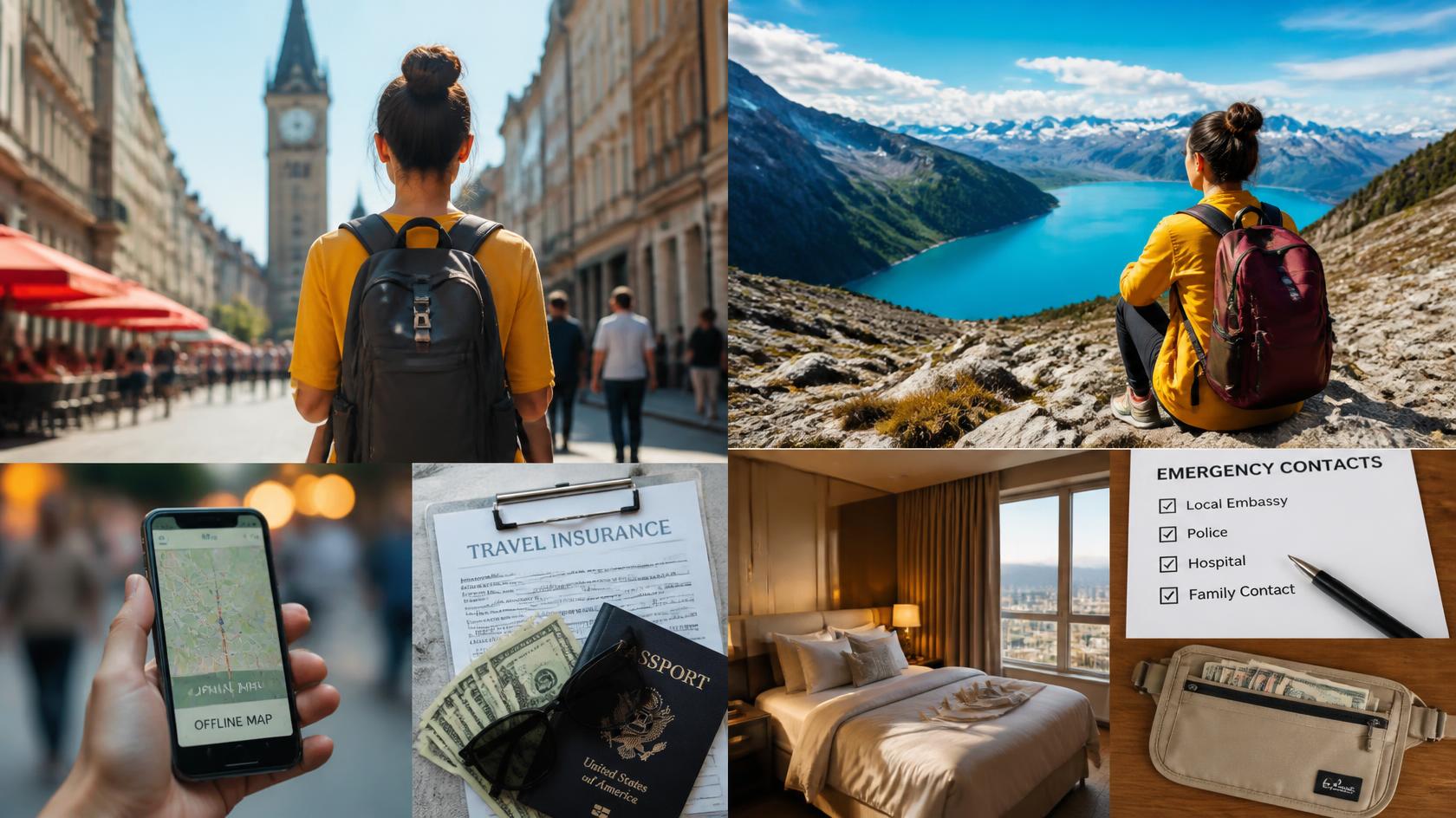
The top 10 solo travel safety tips for first-time travelers include researching your destination, booking safe accommodation, sharing your itinerary with trusted contacts, keeping digital and physical copies of important documents, staying aware of your surroundings, avoiding risky situations, carrying emergency contacts, purchasing travel insurance, protecting valuables, and respecting local customs and laws.

We think planning ahead turns worry into excitement. With our solo travel safety tips for first-time travelers, you can dodge common dangers. Our guide keeps you safe while you explore the world’s hidden spots.
Key Takeaways
- Prioritize digital security by using encrypted apps and offline maps.
- Research local customs to blend in and respect cultural norms.
- Keep digital and physical copies of your essential documents.
- Share your detailed itinerary with a trusted friend or family member.
- Trust your instincts when navigating unfamiliar environments.
Essential Pre-Trip Research and Planning
Your safety starts long before you reach your destination. We think that good preparation is key for a great trip. It helps you understand where you’re going and feel confident in new places.
Using these solo travel tips early on helps spot risks before they happen. Being proactive is the best way to stay safe when traveling alone.
Verifying Destination Safety Ratings
Before you book your trip, check official government travel advisories. They give updates on safety, health, and laws. Also, look at safety databases to get a full picture of your destination.
- Check the official government portal for your home country.
- Review recent reports from international travel safety organizations.
- Monitor local news outlets for any sudden changes in the area.
Mapping Local Emergency Services
Finding important services is key. Make a map with hospitals, police stations, and your embassy. This gives you a critical safety net if something unexpected happens.
| Resource Type | Purpose | Action Item |
|---|---|---|
| Local Police | Immediate assistance | Save local emergency number |
| Medical Facilities | Health emergencies | Pinpoint nearest hospital |
| Consular Office | Legal or document help | Note embassy address |
| Travel Insurance | Financial protection | Keep policy details handy |
By getting these details in order, you’re ready for anything. This careful planning is a big part of traveling alone safety and makes your trip better.
Mastering Digital Security and Connectivity
Digital security is key for safe travel today. Your smartphone is a map and lifeline when you’re away. Robust security measures keep your info safe, so you can enjoy your trip.
Securing Your Mobile Devices
Before you go, check your device settings. Use biometric locks and remote tracking like “Find My” or Google’s “Find My Device.” These are solo travel tips to find or clear your data if your phone is lost or stolen.
Don’t use public Wi-Fi for banking or private accounts. Use a VPN to encrypt your connection instead. This keeps your digital life safe from hackers.
“Preparation is the best defense against the unexpected, when you’re exploring alone.”
Utilizing Reliable Offline Navigation Tools
Not all places have good internet. Download offline maps for your trip before you leave. Google Maps or Maps.me help you navigate without internet.
A good translation app is also vital for traveling alone safety. It helps in emergencies or when asking for directions. Here are the top digital tools for solo travelers.
| Tool Category | Recommended App | Primary Benefit |
|---|---|---|
| Navigation | Google Maps | Offline map access |
| Communication | Google Translate | Real-time language support |
| Security | NordVPN | Encrypted browsing |
| Emergency | Life360 | Location sharing |
Using these solo travel tips makes you safer. Stay connected and secure to enjoy your freedom without worry.
Strategic Accommodation Selection for Solo Travelers
Choosing the right place to stay is key for solo travelers. Your lodging affects your comfort and safety. By picking wisely, you ensure a safe spot to rest after exploring.
Evaluating Neighborhood Safety and Accessibility
Don’t just look at the room; check the area too. A cheap place might not be safe. Look for areas that are lively and safe at night.
Here are things to think about when choosing a place:
- Proximity to public transit: Make sure it’s close to buses or trains.
- Street lighting: Pick places with good lighting to avoid dark alleys.
- Local amenities: Check if there are shops and cafes nearby.
Prioritizing Verified Guest Reviews
Reviews from other travelers are very helpful. We look at what solo travelers say to understand a place. They often share important details that websites don’t.
Check for mentions of staff responsiveness and safety features. If many say a place is not safe, keep looking. Trusting reviews helps you stay safe and enjoy your trip.
Managing Finances and Protecting Valuables
Managing your money wisely is key when traveling alone. Your financial security is in your hands. Taking steps to protect your money lets you enjoy your trip without worry.

Diversifying Payment Methods
It’s wise not to rely on just one way to pay while abroad. Carry a mix of credit cards, debit cards, and local currency. This way, you’re always prepared if a card is lost or declined.
Keep your main cards in different places. If one wallet is lost, you’ll have others to fall back on. This simple habit is a must for effective solo travel safety.
“By failing to prepare, you are preparing to fail.”
Benjamin Franklin
Using Anti-Theft Gear and Hidden Storage
Protecting your valuables is as important as keeping your digital info safe. Use anti-theft gear like money belts or hidden neck pouches. These keep your cash and cards safe and hidden from view.
Always choose discreet storage for your passport and emergency cash. Keeping these items close to your body reduces theft risk. These steps help you manage your budget and stay worry-free on your travels.
Core Solo Travel Safety Tips for First-Time Travelers
Traveling alone for the first time means being very aware. Learning a few essential habits will make you feel confident in new places. These Solo Travel Safety Tips for First-Time Travelers will help you stay safe while enjoying your freedom.
Maintaining Situational Awareness in Public Spaces
Being aware of your surroundings is key to avoiding trouble. Always watch the people and things around you. Avoid the common trap of being too caught up in your phone or wearing headphones in crowded places.
Listening to your gut is important. If a place or situation feels off, leave right away. Your instincts can guide you in new places.
- Keep your head up and maintain a confident posture to appear purposeful.
- Scan your environment periodically to identify nearby exits or safe havens.
- Limit your use of digital devices to private, secure locations like cafes or hotel lobbies.
Establishing a Trusted Communication Protocol
Staying in touch with loved ones back home adds security. Set up a regular check-in before you leave. This way, someone you trust always knows where you are and if you’re okay.
These solo travel safety tips for first-time travelers are more than just texts. Share your full itinerary and hotel info with someone you trust. Here are some tips for staying in touch:
- Schedule daily check-in times to confirm your safety.
- Share your live location via secure apps if you are heading to remote areas.
- Keep a physical copy of emergency contacts in your bag in case your phone battery dies.
By following these steps, you build a safety net. This lets you enjoy exploring without worry. Preparation is the key to a great solo trip. If you are planning to schedule a weekend travel then read this travel guide Best Weekend Getaway Ideas for Families and Couples (2026 Travel Guide), this guide will help you throughout the journey.
Navigating Transportation Safely
Learning how to use local transportation is key for solo travelers. When you first arrive in a new city, the transit system can seem too much. But, staying organized is a top first-time traveler safety tip.
Choosing Reputable Transit Options
Always choose official and well-known transportation services for your safety. Use licensed taxis or ride-sharing apps that show driver info and track your journey.
Don’t take rides from unknown people at airports or train stations. Reliability is your best defense against risks when traveling.
Handling Late-Night Arrivals and Departures
Traveling at night in new places needs extra care. Book your airport transfers or private car services early to avoid late-night risks.
Having a plan for your solo travel checklist is vital. Secure your ride before you arrive to avoid waiting in public places.
| Transit Method | Safety Level | Convenience |
|---|---|---|
| Official Taxis | High | Moderate |
| Ride-Sharing Apps | High | High |
| Public Buses | Low | Low |
| Private Transfers | Very High | Very High |
Health and Wellness Precautions
We think being proactive about health is key to a stress-free solo trip. When you’re alone, your health is your most important thing. Good solo traveler advice keeps you full of energy and strong, wherever you go.
Preparing a Complete Travel Medical Kit
A good medical kit is a must-have for your solo travel checklist. Pack basic first-aid items like bandages, wipes, and gauze. Don’t forget over-the-counter pain meds and any daily meds you need.
Always keep your meds in their original packaging to avoid customs trouble. If you have health issues, carry a copy of your medical history. This way, you can handle small health problems on your own.
Managing Dietary Safety and Hydration
Staying healthy means being careful about what you eat. Choose places to eat that look clean and busy. Busy places often have fresh food.
Drinking enough water is also key, more so in hot places. Stick to bottled or filtered water to avoid getting sick. Drinking water keeps your immune system up and helps you stay alert while traveling.
| Category | Essential Item | Purpose |
|---|---|---|
| First Aid | Adhesive Bandages | Minor cuts and scrapes |
| Medication | Pain Relievers | Headaches or fever |
| Hydration | Reusable Filter Bottle | Safe drinking water |
| Hygiene | Hand Sanitizer | Preventing germs |
Socializing and Meeting People Responsibly
Socializing is a big part of any trip, but it needs careful planning to keep you safe. It’s natural to want to meet locals and other travelers. But, it’s key to follow solo travel precautions to have a good time. This way, you can make friends without risking your safety.

Setting Boundaries with New Acquaintances
It’s important to set clear boundaries when you meet new people. Always be polite but firm if you don’t want to talk about certain things. Don’t share where you’re staying or your plans with someone you just met.
“True freedom in travel comes from the confidence that you are in control of your own narrative and your own safety.”
Here are some tips for meeting new people:
- Don’t share your hotel or hostel name until you really know someone.
- Don’t tell strangers about your plans for the next day.
- If a conversation feels too personal, it’s okay to leave.
Identifying Safe Social Environments
Choosing the right place to meet people is very important. Look for places where you can meet others in a safe, public setting. These places often have staff or guides around, which helps keep you safe.
Places like popular cafes, group tours, or workshops are great. They let you meet people while you’re in a safe area. This way, your social life can make your trip better, not riskier.
Handling Unexpected Situations and Emergencies
Dealing with a crisis abroad needs more than luck; it needs a solid plan. We hope for smooth trips, but being ready helps when things go wrong. Being prepared lets you think clearly and find solutions, not just worry.
“The best way to predict the future is to create it, but the best way to handle the unexpected is to prepare for it.”
— Anonymous
Executing a Crisis Response Plan
A good crisis plan starts with being organized. Keep digital and physical copies of important documents like your passport and insurance in a safe place. Having these documents ready can save time in emergencies.
Staying calm is key when facing unexpected problems. By planning ahead, you can avoid getting lost in stress. Here are some must-haves for your emergency kit:
| Item | Purpose | Storage Method |
|---|---|---|
| Passport Copy | Identity Verification | Encrypted Cloud & Physical Folder |
| Insurance Policy | Medical Coverage | Digital PDF & Printed Copy |
| Emergency Contacts | Communication | Wallet Card & Phone Notes |
Accessing Local Consular Assistance
If you face a big problem, your country’s consulate or embassy is your main help. They offer support for lost passports, legal issues, or serious health problems. Knowing where your embassy is and how to reach them is key to your solo travel precautions.
Register your travel plans with your government before you leave. This makes it easier for them to find you if there’s a crisis. Reliable communication with embassy staff can make a scary situation more manageable, helping you get home safely.
Conclusion
Solo travel is a special way to discover yourself and see the world. You get to explore new places and cultures by yourself. This gives you a sense of freedom and independence.
Getting ready for your trip is key to a great adventure. By following safety tips, you can handle any challenges that come your way. You’ll feel more confident and ready to take on the world.
We encourage you to share your travel stories and ask questions. Talking with other travelers can make your journey even better. You’ll learn new things and get inspired for your next trip.
We wish you a year filled with amazing travels and unforgettable memories. May these tips help you enjoy the freedom of exploring on your own. Safe travels as you explore the world, one place at a time.
FAQ
What are the most important solo travel safety tips for first-time travelers to consider during the planning phase?
Starting with thorough research is key. Check the U.S. Department of State travel advisories for your destination. Make a solo travel checklist to include local emergency numbers and the nearest hospitals or embassies.
How can we ensure our digital security and connectivity while traveling alone in 2026?
Keeping your devices secure is a must. Use biometric locks and strong passwords. Enable remote tracking with Apple’s Find My or Google’s Find My Device.Download offline maps for areas with no service. Keep digital copies of your passport on secure cloud services like iCloud or Dropbox.
What should we look for when selecting safe accommodation as a solo traveler?
Choose safe and accessible areas. Look for well-lit, populated districts on Booking.com or TripAdvisor. Check verified guest reviews for insights into the property’s safety.
What is the best solo traveler advice for managing money and protecting valuables?
Carry different payment methods like credit cards and local currency. Use anti-theft gear from brands like Pacsafe. Keep your valuables hidden in money belts or backpack pouches.
How can first-time travelers maintain situational awareness in unfamiliar environments?
Stay alert and avoid distractions. Trust your instincts if a place feels off. Use WhatsApp for daily check-ins with family.
What are the best solo travel precautions to take when using local transportation?
Stick to reputable transit options like official taxis or Uber and Lyft. For late-night arrivals, book a private transfer for a safe journey.
What health and wellness items should be included in a solo travel checklist?
Keep a comprehensive travel medical kit handy. Include first-aid supplies, hydration salts, and personal medications. Choose safe restaurants and drink bottled water to avoid illnesses.
How can we meet new people and socialize responsibly while traveling alone?
Join group tours with companies like G Adventures or Intrepid Travel to meet others. Set boundaries and don’t share too much about your plans until you trust someone.
What steps should we take if an emergency occurs during our solo journey?
Have a crisis response plan ready. Keep emergency contacts and the nearest consulate’s address saved. Contact your travel insurance provider like Allianz or World Nomads for help.

